Chaser
Accounts receivable automation that chases overdue invoices with personalised reminders and predicts when customers will pay.
What is Chaser?
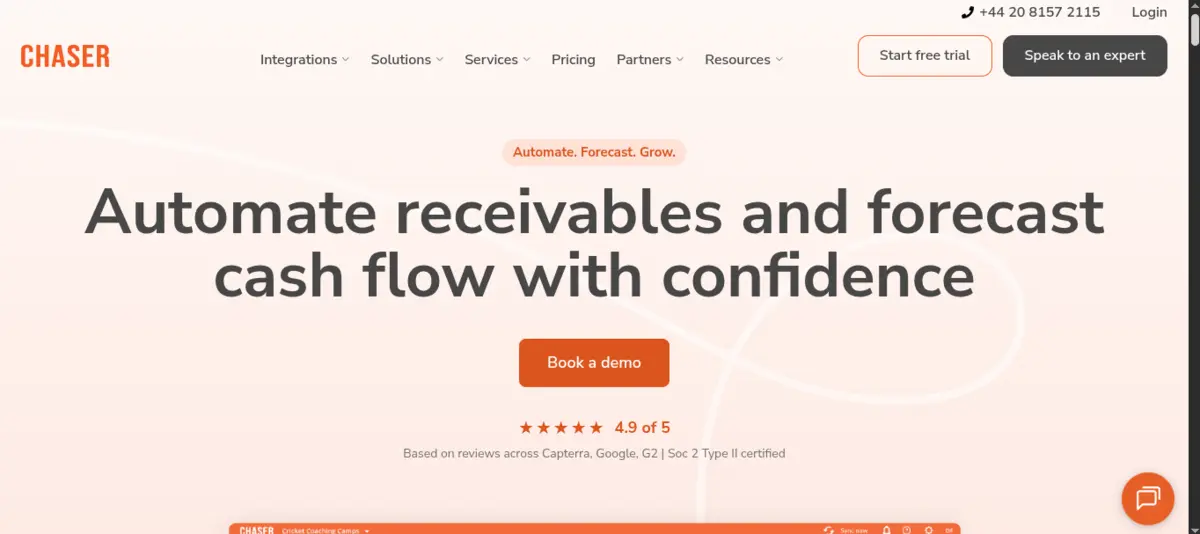
Chaser automates the process of following up on unpaid invoices. It connects to a company’s accounting system - QuickBooks, Xero or Sage - pulls in outstanding invoice data and sends payment reminder emails and SMS messages on a configurable schedule. The reminders are personalized to read as though they came from someone on the finance team rather than from an automated system, which helps maintain the customer relationship while still applying consistent collection pressure.
Beyond sending reminders, Chaser tracks every interaction - when an email was opened, when a customer clicked the payment link and when a promise to pay was made. It uses payment history data to predict which customers are likely to pay late, giving finance teams the ability to prioritize their follow-up efforts on the accounts most at risk.
The platform also provides a payment portal where customers can pay outstanding invoices directly, supports multiple currencies and includes reporting on days sales outstanding and other receivables metrics. All activity syncs back to the accounting system so the books stay current without duplicate data entry.
Where it shines
The quality of the automated reminders is Chaser’s biggest differentiator. Unlike generic past-due notices that customers immediately recognize as automated, Chaser’s emails are customizable in tone, language and timing. Businesses can craft reminder sequences that start polite and become progressively firmer, matching the cadence they would use if a real person were managing the process. The emails come from the company’s own domain and can be personalized with the contact’s name, invoice details and account history.
The payment prediction feature adds genuine value for finance teams managing a large receivables book. By analyzing historical payment patterns - how many days late a customer typically pays, which reminder they respond to, whether certain amounts take longer - Chaser flags invoices likely to become problems. This lets a small team focus escalation efforts where they will have the most impact.
Integration with QuickBooks, Xero and Sage is seamless. Invoice data flows in automatically, payment status updates flow back and DSO reporting gives a clear picture of receivables health without exporting to spreadsheets.
Where it falls short
Chaser chases invoices but does not collect debts. Once an invoice moves past the late-reminder stage into genuine collections territory - legal letters, credit reporting, third-party collection - Chaser’s automation ends. Businesses with significant bad debt issues will still need a collections agency or legal counsel alongside Chaser.
For very small businesses with only a handful of customers, Chaser may be more tool than is needed. A company that sends ten invoices a month can manage follow-ups manually. The platform’s value scales with invoice volume - the more outstanding invoices, the greater the time savings.
Chaser relies on data quality in the connected accounting system. If invoice records are incomplete or customer email addresses are outdated, the reminders will reflect those gaps. Clean accounting data is a prerequisite for effective automation.
Conclusion
Chaser solves a specific, persistent problem - getting customers to pay their invoices on time - and it does so in a way that feels personal rather than robotic. The combination of customizable reminder sequences, payment prediction and tight accounting system integration makes it a practical choice for any business where outstanding receivables consume meaningful finance team hours. It will not replace a collections strategy for truly delinquent accounts, but for the everyday work of nudging customers toward timely payment, Chaser is an effective and well-executed tool.