Expensify
Receipt scanning and expense reports that most employees already know how to use, with cards and bill pay added on.
What is Expensify?
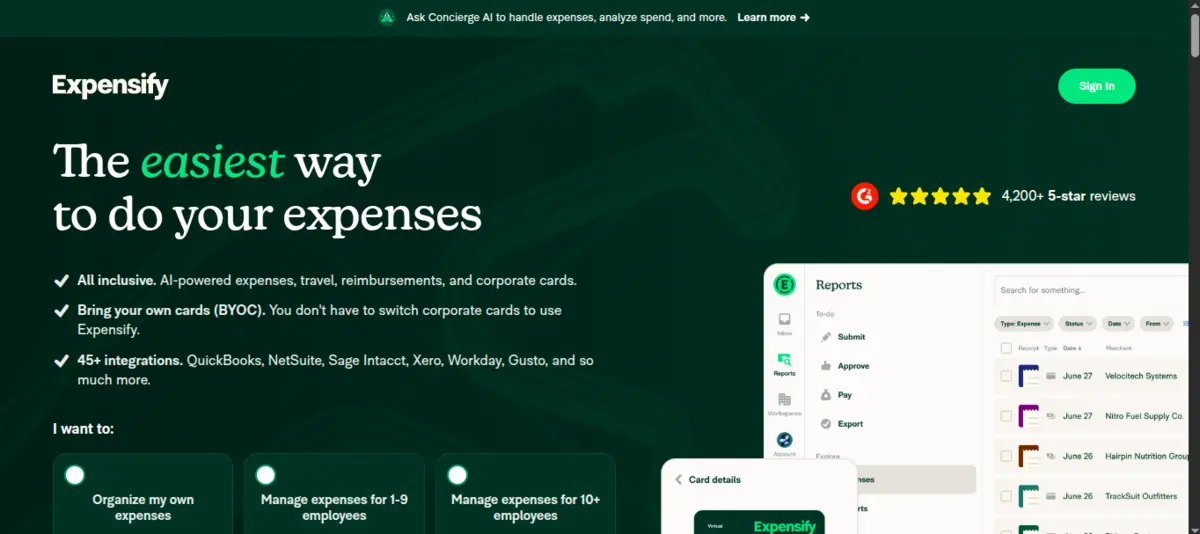
Expensify handles the classic expense-report workflow. Employees photograph a receipt with their phone, the app reads it using OCR, populates the details and attaches the image to a draft report. Reports are routed through a configurable approval chain, and once approved, reimbursement can be issued directly through the platform. Over time Expensify has expanded beyond receipt scanning to include corporate cards, bill pay and invoicing, aiming to become a broader spend-management suite rather than a single-purpose tool.
The platform supports integrations with most major accounting systems - QuickBooks, Xero, NetSuite, Sage - so approved expenses flow into the general ledger without manual re-entry. Policy rules can be configured to flag out-of-policy spend, require manager approval above certain thresholds and auto-categorize common merchant types.
Where it shines
Familiarity is Expensify’s greatest asset. It has been around long enough that many employees have used it at a previous job, which means onboarding friction is minimal. There is no lengthy training session required - most people already know the photograph-receipt-submit-report loop. For companies hiring frequently, this saves real time.
Receipt scanning is quick and accurate. The SmartScan feature typically extracts merchant name, date, amount and currency correctly on the first pass, even for crumpled or faded receipts. When it does miss, corrections are straightforward. Mileage tracking and per-diem calculations are built in for teams that need them.
The free tier makes Expensify accessible to very small teams or freelancers who just need to track personal business expenses. It provides basic scanning and report creation without a subscription, which is a genuine advantage for micro-businesses not yet ready to commit to paid tooling.
Integrations are broad. Because Expensify has been in market for years, connectors to accounting platforms, HRIS systems and ERP tools are mature and well-documented. Finance teams rarely encounter a system that Expensify cannot talk to.
Where it falls short
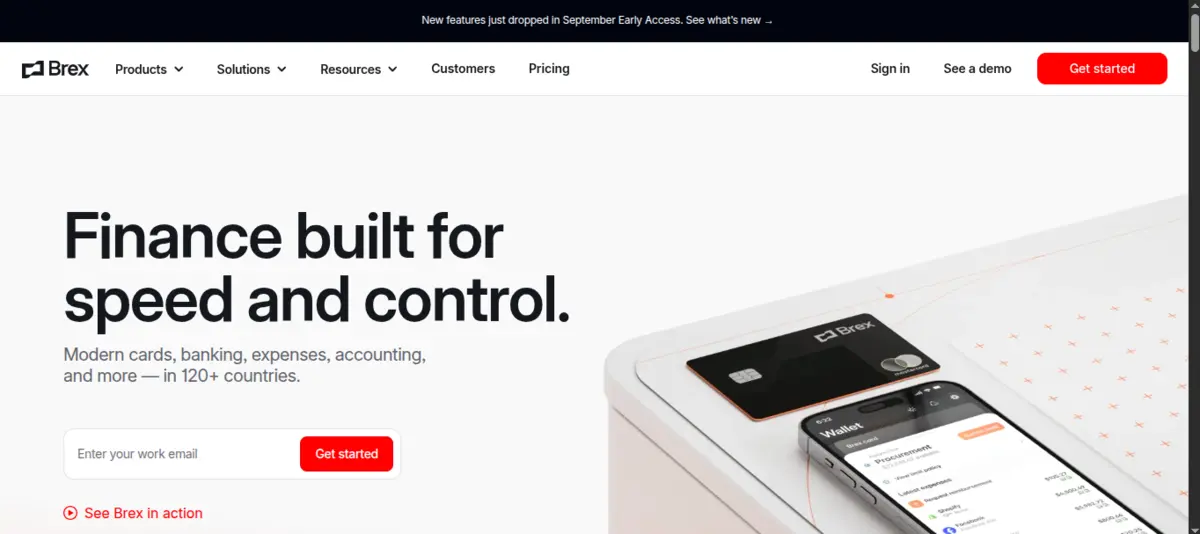
The product’s ambition to be a full spend-management platform creates tension with its roots. Corporate card issuance and spend controls exist but feel less developed than platforms built around cards from the start. Companies that want proactive spend management - real-time controls, virtual cards for specific vendors, automatic receipt matching at the point of sale - will find Ramp and Brex more capable. Those platforms aim to eliminate the expense report entirely rather than streamline it.
Pricing and plan structures have changed several times, which has frustrated long-time customers. Understanding exactly which features are included at which tier requires careful reading, and some users have reported unexpected cost increases after plan migrations.
The approval workflow, while functional, can feel rigid for organizations with complex or matrix reporting structures. Customizing multi-level approvals or conditional routing sometimes requires workarounds that are not immediately obvious.
Finally, the mobile app - while serviceable - has not kept pace visually with newer competitors. It gets the job done, but the experience feels utilitarian rather than polished.
Conclusion
Expensify remains a reliable, well-known choice for small and mid-sized teams that need a straightforward expense-report workflow with minimal training. Its broad integrations and name recognition are real advantages. However, companies whose primary goal is to control spend proactively - rather than process reports after the fact - should evaluate card-first platforms like Ramp or Brex that approach the problem from a different angle. Expensify is best when the expense report is the workflow you want to keep, just faster.