BILL
Accounts payable, receivable and spend management for small and mid sized businesses, with AI that reads and codes invoices.
What is BILL?
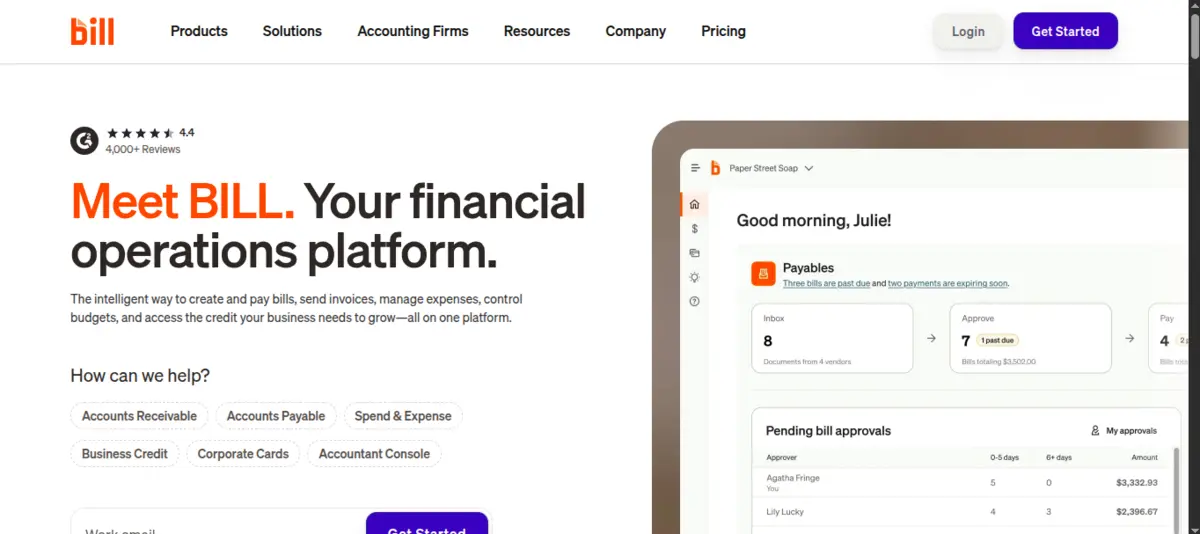
BILL automates the accounts payable process from invoice receipt through payment. Vendors email invoices to a dedicated address or upload them directly, and BILL’s AI extracts key data - vendor name, amount, due date, line items and GL coding. The extracted details are routed through configurable approval workflows before payment is issued via ACH, virtual card, international wire or even paper check for vendors that still require one.
Beyond payables, BILL includes accounts receivable functionality for sending invoices and collecting payments, plus spend management features. The platform syncs bidirectionally with major accounting systems including QuickBooks Online, QuickBooks Desktop, Xero, NetSuite and Sage Intacct, keeping the general ledger current without manual journal entries.
BILL also maintains one of the largest accountant partner networks in the AP space. Accounting firms can manage multiple client accounts from a single dashboard, making it a common choice for outsourced bookkeeping and controller practices.
Where it shines
The approval workflow engine is BILL’s core strength. Businesses can set up multi-level approval chains based on amount thresholds, departments or expense categories. This turns what is often an informal email chain into an auditable, trackable process. For companies with compliance requirements or investors who expect financial controls, the workflow alone justifies adoption.
The breadth of payment methods is another advantage. Paying vendors by ACH costs nothing extra, virtual cards can earn rebates and international payments reach over 130 countries. The ability to consolidate all vendor payments - domestic and international - into one platform simplifies cash management considerably.
For accounting firms, the multi-entity dashboard is a genuine time saver. Firms processing bills for dozens of clients can review, approve and pay from a centralized view without logging in and out of separate accounts. This has made BILL a default recommendation from many bookkeeping practices.
The accounting system integrations are mature and well tested. The QuickBooks and NetSuite syncs in particular handle multi-subsidiary and multi-currency scenarios that trip up newer competitors.
Where it falls short
Pricing is per user, which adds up quickly for businesses where multiple people need to approve invoices. A company with five approvers will pay meaningfully more than one with a single finance person, even if the invoice volume is identical.
The AI data extraction, while competent on standard invoice formats, still requires human review on unusual layouts, handwritten invoices and international documents with unfamiliar structures. Expect to correct extracted data regularly during the first few months as the system learns vendor patterns.
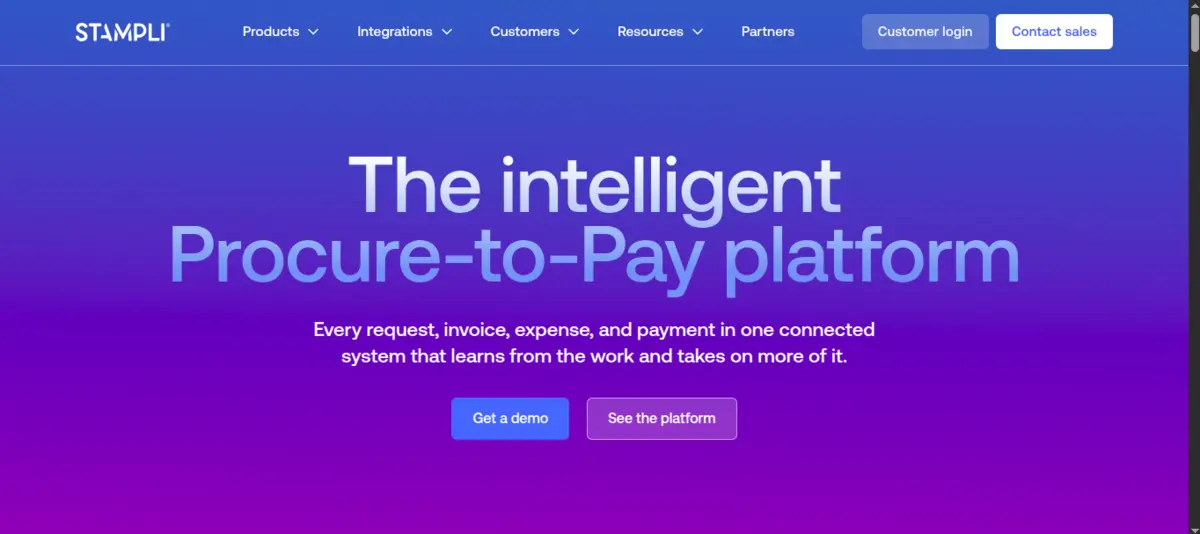
The interface has not kept pace with newer competitors. Navigation can feel cluttered, and some workflows require more clicks than they should. Businesses evaluating BILL alongside Stampli or Ramp will notice the design gap immediately.
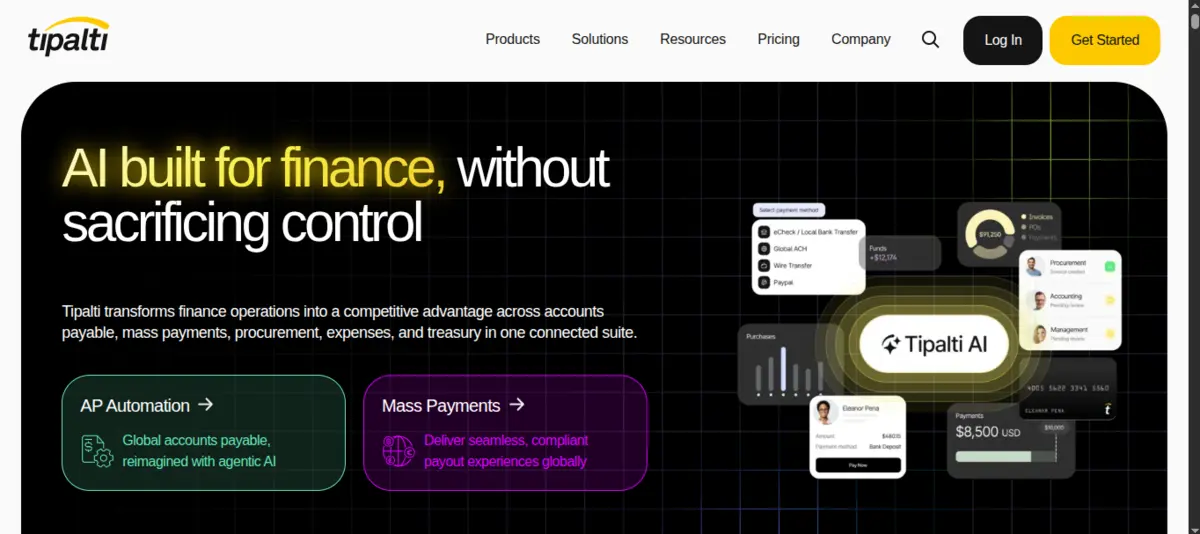
For companies with high-volume international payables, Tipalti offers deeper global payment capabilities including tax form collection and multi-entity payment runs that go beyond what BILL provides natively.
Conclusion
BILL remains one of the most widely adopted AP automation platforms for small and mid-sized businesses, and for good reason. The approval workflows, broad payment options and deep accounting integrations form a solid foundation. Firms and businesses already in the BILL ecosystem will find it dependable. Newer entrants may offer slicker interfaces, but few match BILL’s breadth across payables, receivables and accountant workflows in a single platform.